 Shipping Canada-Wide
 USA Store




How Cork Trees Help Fight Climate Change
Climate change demands real solutions.
Surprisingly, one of the most powerful tools already exists — and it grows naturally in Mediterranean forests.
Cork trees are not just renewable.
They are climate-active.
When you choose cork, you support a material that actively helps remove carbon from the atmosphere.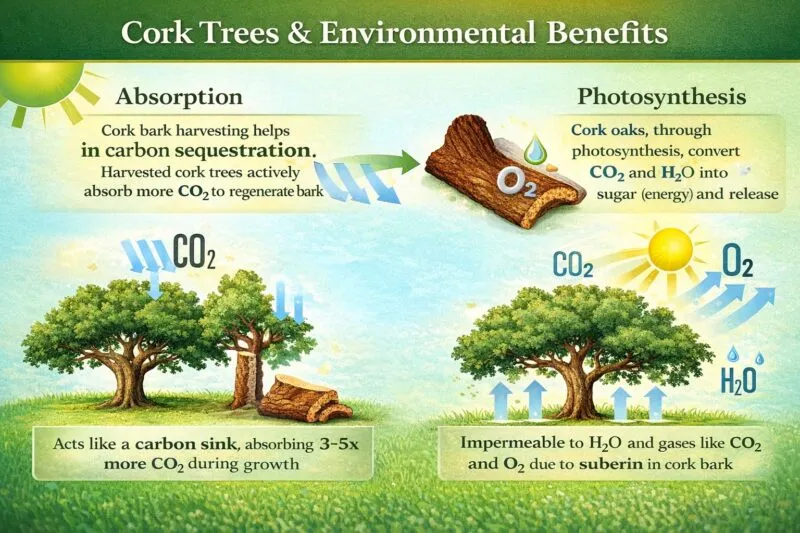
Harvesting Without Harm
Cork is harvested from the bark of cork oak trees — but the tree itself is never cut down.
Every 9 to 12 years, trained harvesters carefully remove the outer bark by hand. The tree remains fully alive. In fact, harvesting triggers something extraordinary.
Instead of declining, the cork oak accelerates growth.
To rebuild its bark, the tree enters a high-energy regeneration cycle. That process demands significant carbon intake.
The result?
Harvested cork trees absorb three to five times more CO₂ than trees that are never harvested.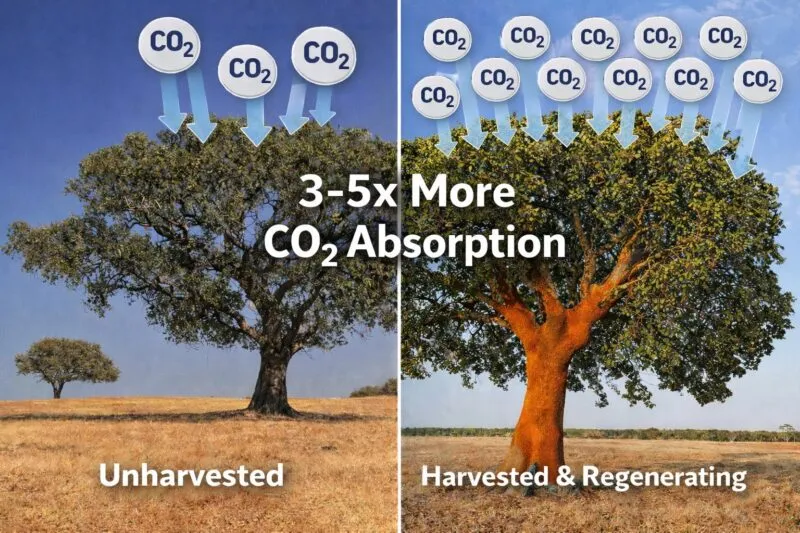
Rather than depleting forests, cork harvesting strengthens their environmental impact.
A Living Carbon Capture System
Cork oak trees can live for more than 200 years. Over that lifetime, they continually pull carbon dioxide from the atmosphere.
But during regeneration periods, their carbon absorption intensifies — making cork forests some of the most effective long-term carbon sinks in the world.
Mediterranean cork forests remove millions of tons of CO₂ annually while remaining economically sustainable.
And that matters.
Because when forests have economic value, they are protected.
Supporting cork products helps ensure these forests remain standing — instead of being cleared for other uses.
Clean Air, Naturally
Through photosynthesis, cork oaks transform CO₂ and water into energy, releasing oxygen back into the air.
So cork trees don’t just store carbon — they actively contribute to cleaner air and a healthier atmosphere.
Every cork forest plays a role in maintaining ecological balance.
More Than Carbon Storage
Cork forests — known as Montados — are environmental powerhouses.
They:
• Prevent desertification in dry climates
• Reduce soil erosion through deep root systems
• Protect biodiversity and rare wildlife
• Support pollinators and native species
• Regulate water cycles naturally
• Function as natural watersheds
These ecosystems are among the richest biodiversity zones in Europe.
When you support cork, you support an entire living habitat.
Why Cork as a Material Matters
The sustainability story doesn’t end in the forest.
Cork’s internal structure is made of millions of microscopic air-filled cells. A natural substance called suberin makes cork:
• Impermeable to water and gases
• Naturally insulating
• Resilient and durable
• Lightweight yet strong
Because it is harvested without cutting the tree, cork remains one of the most renewable building materials available today.
Few materials combine regeneration, carbon storage, and performance the way cork does.
Bringing the Climate Solution Into Your Home
Choosing cork means bringing that environmental strength into your living space.
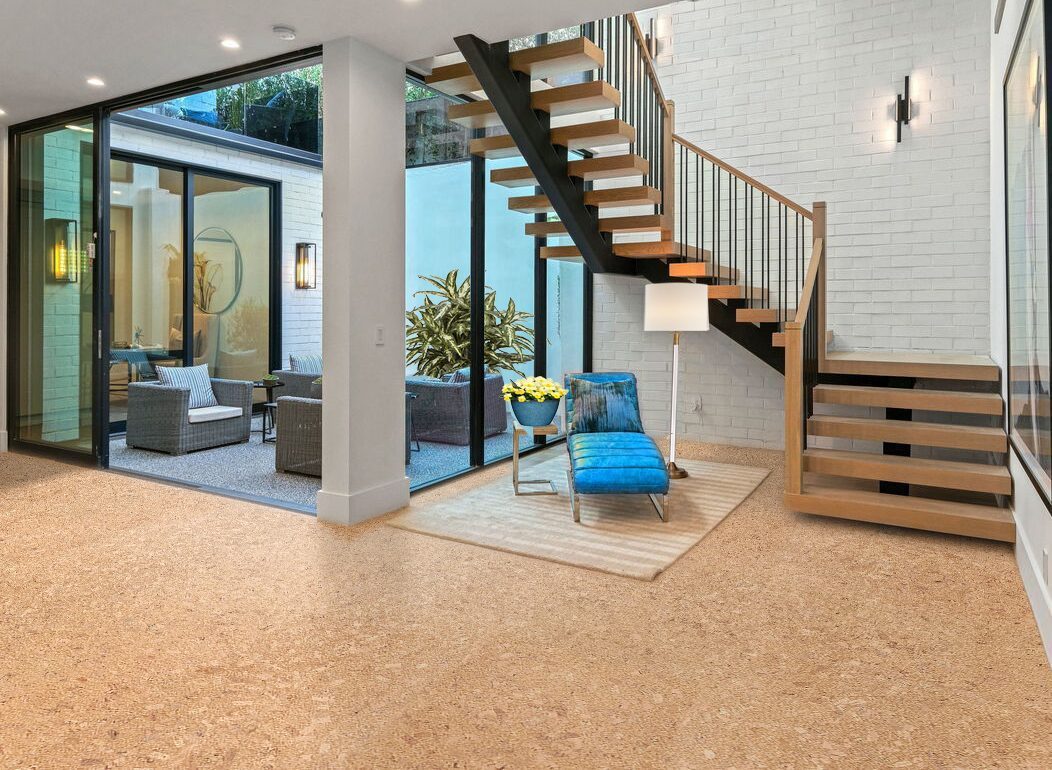
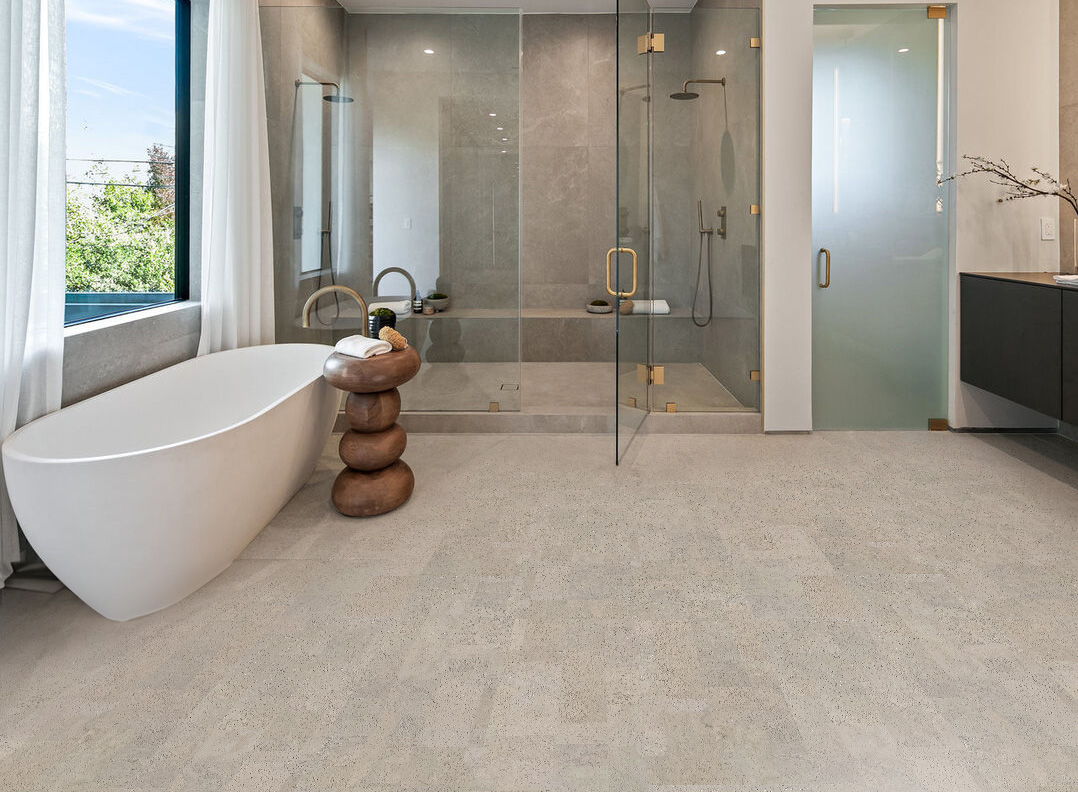
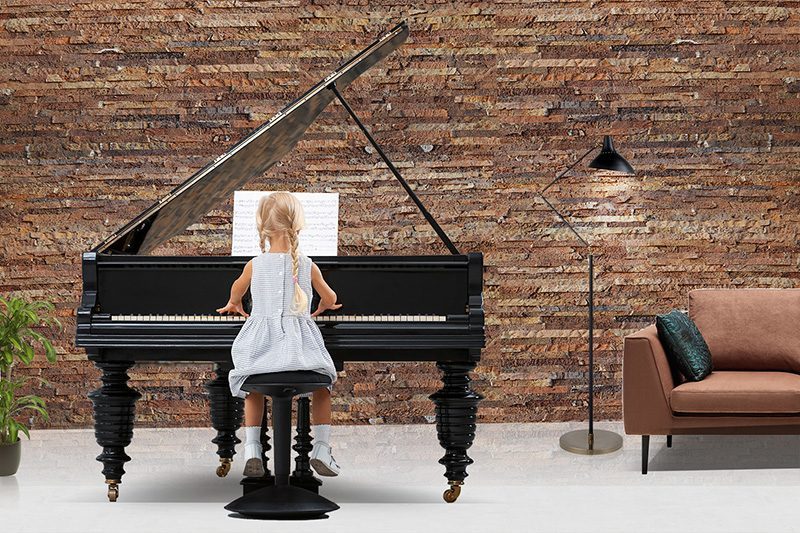
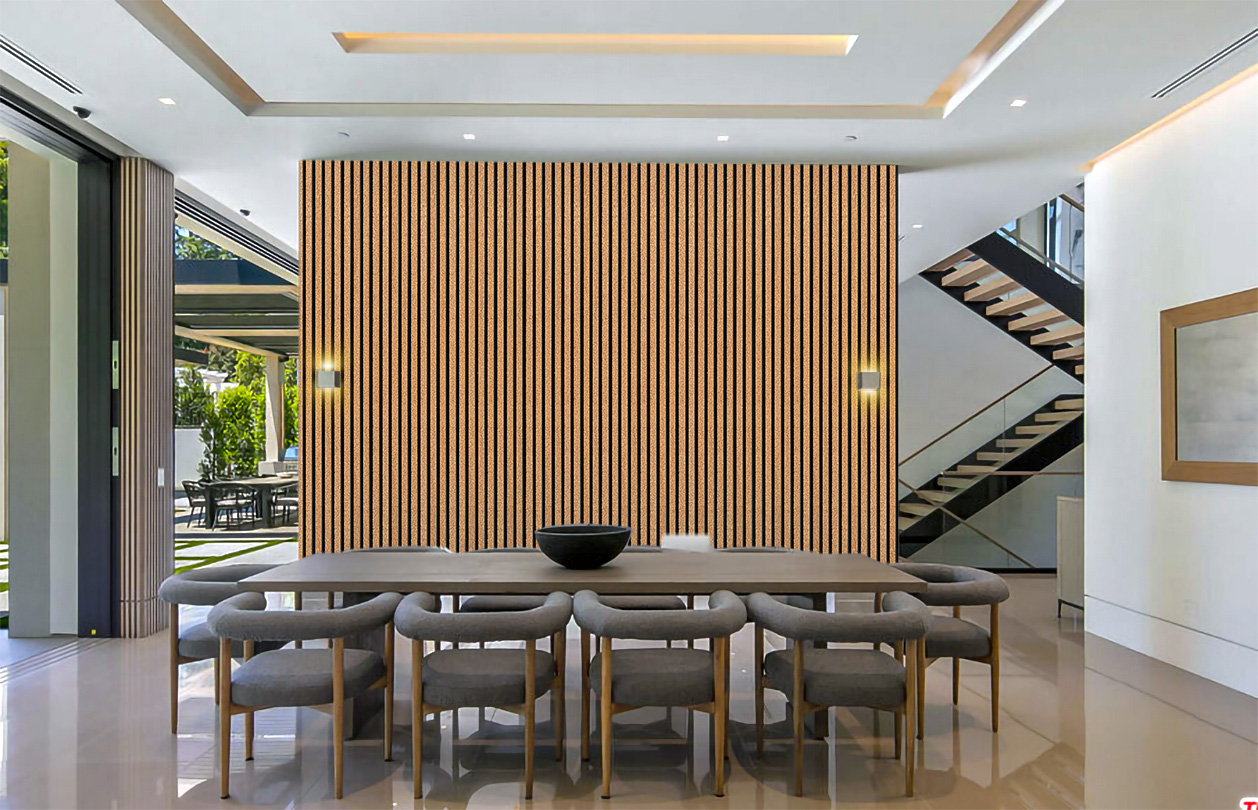
Cork flooring and cork wall tiles offer:
• Natural warmth and comfort
• Acoustic softness and quieter rooms
• Thermal insulation for energy efficiency
• Long-lasting durability
• A lower environmental footprint
This isn’t abstract sustainability.
It’s something you can see, feel, and live with every day.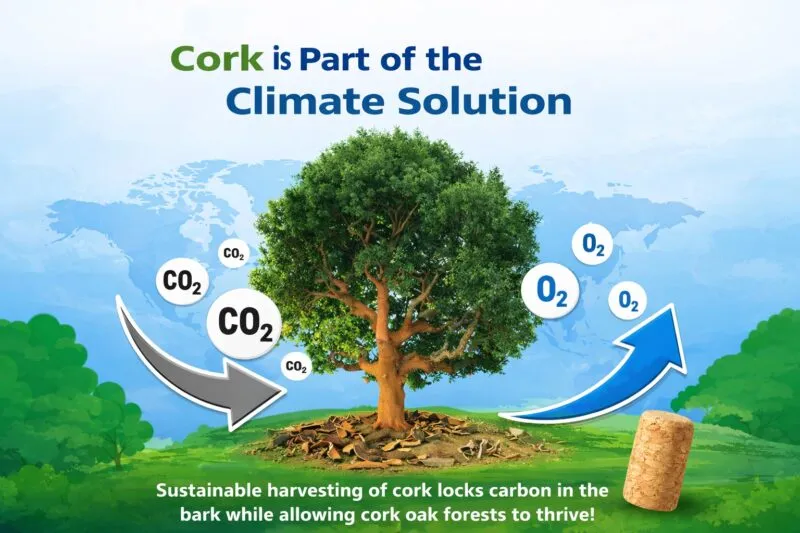
Choose Materials That Matter
Cork isn’t just beautiful.
It isn’t just durable.
And it isn’t just renewable.
It actively contributes to climate resilience.
If you’re ready to make a smarter choice for your home — and the planet —
Order a sample and experience cork for yourself.
Touch the texture.
Feel the natural warmth.
See how sustainability can transform your space.
Cancork.
Smart materials. Real impact.