 Ships Canada-wide
Installation guide
Forna Natural Composite floating flooring needs the correct substrate, moisture barrier, expansion, acclimation, and maintenance plan.
Use this page when
- The product is a Swiss specialty floating floor.
- You need installation and maintenance requirements for the exact product family.
- You are preparing an installer, designer, contractor, or commercial project team.
Before you start
- Confirm the product family and locking system before work starts.
- Review subfloor flatness, moisture, underlayment, expansion, and acclimation requirements.
- Discuss the guide with the installer before scheduling the job.
Important
- Do not assume specialty Swiss floors install like ordinary laminate or vinyl.
- Do not hire only on price if the installer does not understand the locking system.
- Do not skip moisture and expansion checks.
Related resources
Browse flooring
Compare flooring families before selecting full cartons.
Choose the right installer
Review installer experience before scheduling specialty flooring work.
Contact CanCork
Ask for help matching the guide to the exact product and room.
Detailed instructions
Forna Natural Composite Flooring uses the patented UNICLIC® locking system. Planks connect without glue. Prepare wood or chipboard subfloors so they are smooth, level and vibration-free, and use the tools specified in the installation guide.
*Note: Only Hydrowood core Forna flooring is waterproof and suitable for wet areas like bathrooms (can be glued down). HDF-core flooring should not be glued. For bathroom installations, seal edges with Loba 2K Supra AT.*
Subfloor Requirements
-
Must be clean, dry, flat, and structurally sound (meets DIN 18365 standards).
-
Level any uneven areas exceeding 3mm per meter.
-
Not suitable over carpet.
Moisture Limits (CM Method):
-
Cement screed: < 2.0% (heated screeds: < 1.8%).
-
Anhydrite screed: < 0.5% (heated screeds: < 0.3%).
Storage & Acclimation
-
Store unopened boxes flat for 24+ hours in the installation room.
-
Maintain room conditions: 59°–77°F (15–25°C) and 40–60% humidity.
Pre-Installation Checklist
-
Inspect planks in natural light for defects before installing.
-
Minor imperfections can be used for cut pieces.
-
Do not proceed if environmental conditions or product issues exist.
Moisture Barrier (PE Film)
-
Lay 0.2mm polyethylene film over mineral subfloors.
-
Overlap seams by 8 inches (20cm) and tape securely.
-
Extend film 1 inch (2–3cm) up walls.
Tip: PE film ensures smooth floating performance on all subfloors.
Underlayment
-
Pre-attached cork or Green Sound underlay eliminates the need for additional layers.
-
If adding underlay, ensure minimum 200 kPa compression resistance (CS value).
Expansion & Spacing
-
Maximum installation area: 100 x 80 ft (30 x 24m) without expansion joints.
-
Leave 3/8-inch (10mm) gaps around walls and fixed objects.
-
Never fill edge joints with silicone—use transition moldings.
Installation Steps
-
Open packages as needed and mix planks for natural variation.
-
Install parallel to the primary light source for best visual flow.
Two Locking Methods:
A) Angle-to-Angle:
-
Tilt plank 10°, engage the tongue into the groove, and lower to lock.
-
Use a tapping block (min. 8 inches/20cm) to secure seams.
B) Angle & Snap:
-
Connect short ends first, then angle and tap the long edge into place.
-
Stagger end joints at least 8 inches (20cm), ideally 16 inches (40cm).
Critical Notes
-
Never nail or screw planks—floating installation only.
-
For heavy fixtures (e.g., kitchen islands), leave expansion space or use breaks.
-
Bathrooms: Glue planks down and seal edges with silicone. Use PE round cord for perimeter joints.
Obstacle Tips
-
Keep 3/8-inch (10mm) clearance around pipes and door frames.
-
Secure cut pieces with adhesive tape.
-
Avoid nailing door stops through flooring.
Underfloor Heating
-
Max surface temperature: 82°F (28°C).
-
Must be fully embedded in screed. Glue click joints periodically.
Tip: Request a screed supplier’s heating protocol.
Cleaning & Maintenance
-
Daily care: Sweep, vacuum, or damp mop.
-
Stubborn stains: Use pH-neutral PU cleaner.
-
Avoid abrasives, wax, or solvents.
Protective Measures:
-
Place walk-off mats at entrances.
-
Use soft furniture pads (Type W, EN 12529).
-
Never use rubber-backed mats—they can discolor floors.
Contact us if you need help with Forna flooring products or installation instructions.
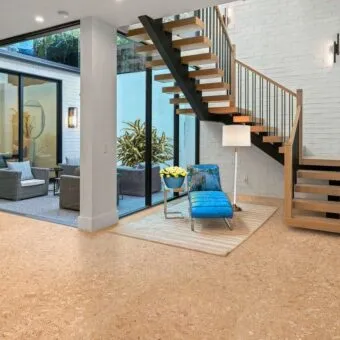 Flooring
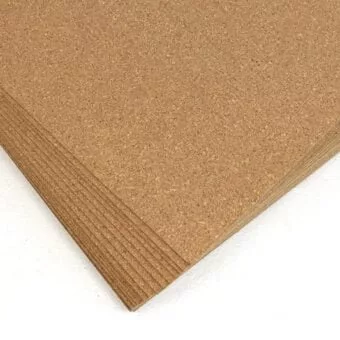 Cork Underlayment
 Supplies & Guides