 Ships Canada-wide
Many homeowners panic when a plank in their floor becomes damaged.
A dropped cast-iron pan, a furniture accident, pet damage, water exposure, or a deep scratch can leave an otherwise beautiful floor looking worn out. The first thought is often, “Do I need to replace the entire room?”
Fortunately, the answer is usually no.
Modern click-lock floating floors can often be repaired by replacing a single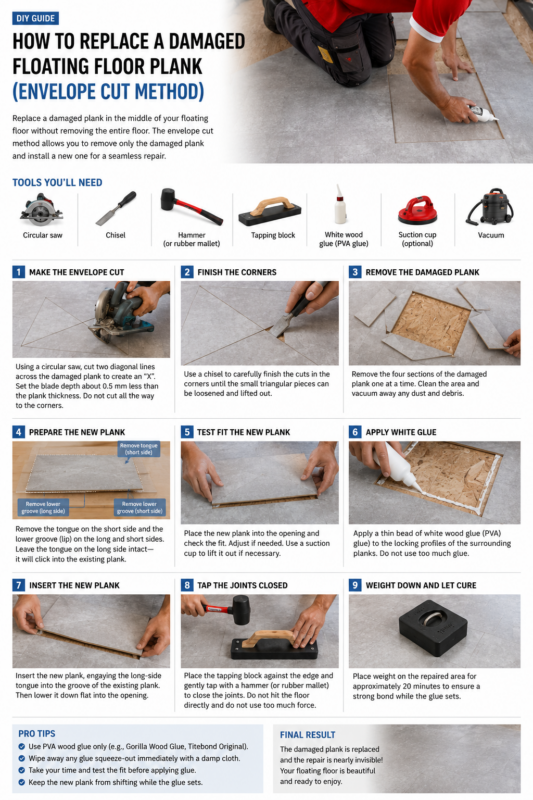 damaged plank without removing the surrounding flooring. Professional installers have been using this technique for years to restore damaged floors quickly and cost-effectively.
Why Replacing One Plank Makes Sense
When only one or two planks are damaged, replacing the entire floor is unnecessary and expensive.
Single-plank replacement offers several advantages:
Lower Cost
Instead of replacing hundreds of square feet of flooring, only one plank is needed.
Faster Repair
Most repairs can be completed in a few hours rather than several days.
Less Waste
Only the damaged plank is removed, making this a more environmentally responsible solution.
Maintains the Original Floor
The surrounding flooring remains intact, preserving the appearance and value of your investment.
Common Causes of Plank Damage
Even durable floors can occasionally suffer damage.
Typical causes include:
-
Heavy furniture being dragged across the floor
-
Deep scratches from pets
-
Water leaks
-
Dropped tools or appliances
-
Burn marks
-
Construction accidents
-
Impact damage from heavy objects
Fortunately, isolated damage does not usually require complete floor replacement.
The Professional Repair Method
Professional flooring installers often use a technique called the Envelope Cut Method.
The damaged plank is carefully cut into sections and removed without disturbing adjacent boards. A new plank is then prepared and installed in the same location.
This method allows the repair to be completed in the middle of a room where disassembling the entire floor would be impractical.
Tools Required
The repair typically requires:
-
Circular saw
-
Hammer or rubber mallet
-
Tapping block
-
Chisel
-
White wood glue (PVA glue)
-
Vacuum cleaner
-
Replacement plank
A suction cup can also be useful when positioning the new plank.
How the Repair Works
The process involves several steps:
1. Cut the Damaged Plank
The damaged board is cut diagonally into sections while protecting the surrounding floor.
2. Remove the Sections
Each piece is carefully lifted out and the area is cleaned.
3. Modify the Replacement Plank
Part of the click-lock profile is removed so the new plank can be inserted into the opening.
4. Test the Fit
The replacement board is dry-fitted before adhesive is applied.
5. Apply White Wood Glue
PVA wood glue is applied to the locking profiles of the surrounding planks.
6. Install the New Plank
The replacement board is inserted and aligned with the existing floor.
7. Close the Joints
A tapping block and hammer are used to gently tighten the joints.
8. Weight the Area
Weight is placed on the repair while the adhesive cures to create a strong bond.
Will the Repair Be Visible?
When performed correctly, most repairs are extremely difficult to spot.
The key factors are:
-
Using a matching replacement plank
-
Properly aligning the joints
-
Closing all gaps completely
-
Cleaning excess adhesive immediately
In many cases, visitors will never notice the repair.
Keep Extra Flooring for Future Repairs
One of the smartest things homeowners can do after installation is save several extra planks.
Having matching flooring from the original production lot makes future repairs much easier and ensures the closest possible color match.
A few leftover planks stored in a dry location can save significant money years later if accidental damage occurs.
Replacing a damaged plank
A single damaged plank doesn’t mean the entire floor needs to be replaced.
With modern floating flooring systems, isolated damage can often be repaired quickly, economically, and with excellent results.
Whether the damage comes from pets, furniture, water, or everyday accidents, replacing a single plank can restore the appearance of the floor while avoiding the cost and disruption of a complete replacement.
For many homeowners, it’s one of the most cost-effective flooring repairs available.
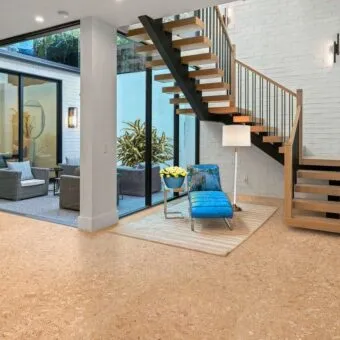 Flooring
 Cork Underlayment
 Supplies & Guides