 Ships Canada-wide
Cork for floor and wall sound control
Sound-control answer
Cork can support sound-control projects when the product matches the problem: underlayment for floor impact sound, wall panels for room echo, and realistic expectations for the full assembly.
- Compare 3mm, 6mm, and 12mm cork underlayment for floor assemblies.
- Compare cork wall panels when the room needs decorative acoustic surfaces.
- Ask a specialist before promising sound ratings or ordering full boxes.
Concrete building floor soundproofing
The 12mm (½”) cork underlay has been tested and found to absorb 48 dB of noise and 6mm (1/4”) cork underlay absorb 23 dB of noise. This is the number that can be ADDED to your subfloor’s calculated rating of (assume 27 dB). The final assembly rating depends on your building’s existing structure; the per-product acoustic test statements are linked from each product page. Acoustic results depend on the complete floor-and-ceiling assembly. Do not add ratings from separate product tests; use an assembly report that matches the project.
Wood-frame building floor soundproofing
Acoustic performance in a wood-frame building depends on the complete floor-and-ceiling assembly. Confirm the building’s existing construction and required test method before selecting flooring or underlayment.
Review the test statements for each proposed product and the full assembly. Do not add product ratings together to predict a finished IIC or STC result; the building structure and test method affect the outcome.
STC/IIC – Flooring, Cork Underlayment, Subfloor and Ceiling
| Flooring |
|
|
|
|
|
|
| Underlayment |
|
|
|
| Building Structures |
|
|
|
|
|
| Ceiling |
|
Your floor’s calculated rating:
Eg. Cork flooring (19 dB) +1/4″ cork underlayment (23dB) + 6” Concrete slab (27 dB)
Eg. Engineer hardwood (0dB)+ 1/2″ cork underlayment (48dB) + Wooden subfloor (25)
Choose cork for sound control projects
Compare underlayment for floor impact noise and wall panels for room echo. Use test data for the relevant assembly.
Impact noise or room echo?
Identify whether you need to reduce impact noise through a floor or reflected sound within a room. Compare the relevant product and assembly data.
Frequently asked questions
Can cork help with sound control?
Cork can help with sound-control projects when the right product is matched to the problem: underlayment for impact noise and wall panels for reflected room sound.
Is cork underlayment enough to soundproof a floor?
No single flooring layer guarantees soundproofing. Results depend on the full assembly, building structure, thickness, installation method, flanking paths, and project requirements.
Should I choose cork underlayment or cork wall panels?
Choose cork underlayment for floor impact sound planning and cork wall panels for decorative acoustic surfaces that help soften room echo.
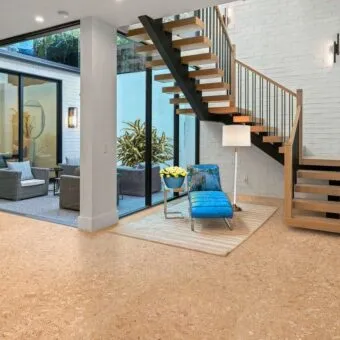 Flooring
 Cork Underlayment
 Supplies & Guides