 Ships Canada-wide

Cork flooring materials and emissions
Materials and emissions
Review the selected flooring’s construction, emissions reports, adhesive and finish requirements, ventilation and care instructions before ordering.
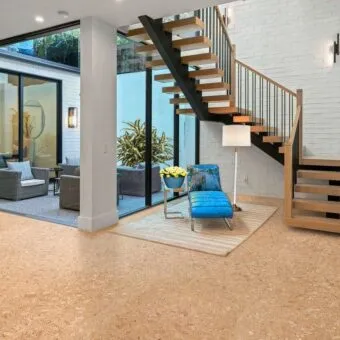
- Compare cork samples for texture, finish, color, thickness, and room lighting.
- Review adhesive, finish, and cleaning-product requirements before installation.
- Use cork when natural material, quiet rooms, warmth, and comfort are priorities.
Cork flooring materials and emissions
Cork flooring materials and emissions
Cork flooring uses bark harvested from living cork oak trees. For a low-emission home, compare the selected product’s certification, adhesives and finishing requirements.
Review the selected Forna product’s emissions reports and the adhesive and finish requirements. A material’s origin alone does not establish indoor air quality.
Cork bark can be harvested without felling the tree and regrows between harvests. Compare the complete product’s sourcing, construction and manufacturing information when assessing its environmental impact.
Cork provides a warm, resilient surface and thermal insulation. Check the selected flooring’s moisture limits, installation method and maintenance requirements for the room.
Choose flooring and underlayment using the acoustic report for the complete assembly and the requirements of your building.
Commitment to Green Building The dramatic changes in global weather patterns have prompted a shift towards more sustainable building practices. Cork flooring and wall coverings are excellent steps towards creating a ‘green’ home. They are not only stylish and comfortable but also contribute significantly to reducing the environmental impact of building materials.
Durability and Recyclability Cork is highly durable and can withstand years of use without significant wear, making it suitable for both residential and commercial spaces. It is 100% recyclable, adding to its eco-friendly credentials. The process of harvesting cork does not involve deforestation; instead, it promotes the longevity of the cork oak tree, which can live and be harvested for over two centuries.

Explore the Possibilities With advancements in technology and innovation, cork is now available in a wide array of colors, shapes, and sizes, allowing it to fit a variety of design aesthetics. Whether you’re aiming for a modern look or a traditional feel, cork flooring offers the flexibility to meet diverse design needs.
Compare cork flooring samples and review the selected product’s emissions certification, installation requirements and maintenance guide. Visit www.cancork.com to view the flooring range.
Compare cork flooring materials and emissions
Compare the complete flooring system: product construction, emissions reports, adhesive, finish, cleaning requirements and room ventilation.
Check flooring materials and emissions
Review product construction, emissions documents, adhesive and finish requirements for the complete installation.
Frequently asked questions
What should I check for cork flooring emissions?
Review the selected product’s emissions reports, adhesive and finish requirements, installation method and maintenance instructions.
What should I compare for indoor air concerns?
Compare product construction, adhesive, finish, room ventilation, maintenance products, samples, and installation instructions before choosing flooring for indoor air goals.
How can I compare cork with vinyl flooring?
Cork is a natural material that many buyers compare with vinyl, laminate, hardwood, and tile when comfort, sound control, renewable sourcing, and material preference matter.
What can I check with flooring samples?
Cancork recommends samples so buyers can compare color, texture, finish, thickness, and room lighting before ordering full boxes.
 Flooring
 Cork Underlayment
 Supplies & Guides