 Ships Canada-wide
Best Waterproof Flooring for Humid, Coastal and Damp Homes in Canada
Natural Flooring Solutions for Canada’s Wet and Humid Climates
Finding waterproof flooring for humid climates can be surprisingly difficult—especially when you want something warmer, quieter and more natural than conventional vinyl flooring.
This is a common concern for Canadian homeowners.
A home on the West Coast of British Columbia may experience months of rain and persistent outdoor humidity. Houses around Vancouver, Victoria, Vancouver Island and the Gulf Islands often have to manage damp winters and crawl-space moisture.
On the other side of the country, coastal communities in Nova Scotia, New Brunswick, Prince Edward Island and Newfoundland face their own combination of ocean air, precipitation and seasonal humidity.
Lakefront homes, heavily wooded properties and cottages can present similar challenges.
A damp outdoor climate does not determine which flooring can be installed inside. Check indoor conditions, subfloor moisture and the selected product’s limits.
At Cancork, there are three flooring systems we particularly recommend investigating for moisture-sensitive environments:
Solid Glue-Down Cork Flooring
Swiss TechSlate® Mineral Flooring
Forna Natural Composite Flooring
Each handles moisture differently, so choosing the right one depends on more than your local weather.
Start by Identifying Where the Moisture Is Coming From
Before deciding that you need a “waterproof floor,” determine what kind of moisture you are actually dealing with.
There are three very different situations.
High Indoor Relative Humidity
A home can be located in an extremely wet climate without having an excessively humid interior.
This is particularly relevant in coastal British Columbia.
Outdoor humidity may be very high, but heating, air conditioning, ventilation and dehumidification can keep the home’s interior within a much more stable range.
Therefore, do not choose flooring based solely on the humidity shown by a weather app.
Indoor relative humidity is what matters to the floor.
Moisture Coming Through the Subfloor
This is a completely different problem.
Concrete can transmit moisture from the ground underneath it. Crawl spaces can also introduce moisture into the floor assembly if they are not properly managed.
In these situations, simply purchasing a waterproof flooring material does not solve the underlying problem.
The subfloor, vapour protection, adhesive and finished flooring all need to work together.
Direct Water Exposure
Finally, there are spaces where actual water may reach the floor.
These include kitchens, entrances, laundry areas, bathrooms and some commercial spaces.
A floor designed for ordinary household humidity is not necessarily designed for repeated standing water.
Understanding the difference between these conditions is one of the most important steps in choosing the correct flooring.
Can Traditional Floating Cork Be Used in a Humid Canadian Climate?
In many cases, yes.
Traditional floating cork remains an excellent choice for a climate-controlled Canadian home.
Cork is naturally warm, quiet and resilient, which is particularly appealing during Canada’s colder months.
However, conventional floating cork floors generally contain an engineered HDF core.
The cork itself performs extremely well around humidity, but an HDF core should not be confused with a waterproof mineral or Hydrowood core.
If your home’s indoor humidity is reasonably controlled and the installation requirements are followed, floating cork can still be entirely appropriate—even in a rainy coastal climate.
For homes where humidity cannot be reliably controlled, however, or where there is greater potential for moisture exposure, we recommend looking at one of the following alternatives.
Option 1: Glue-Down Cork Flooring
For homeowners who specifically want real cork throughout the flooring material, glue-down cork is an excellent option.
Cancork’s 6mm and 8mm glue-down cork tiles do not contain an HDF core.
Instead, the body of the tile is cork.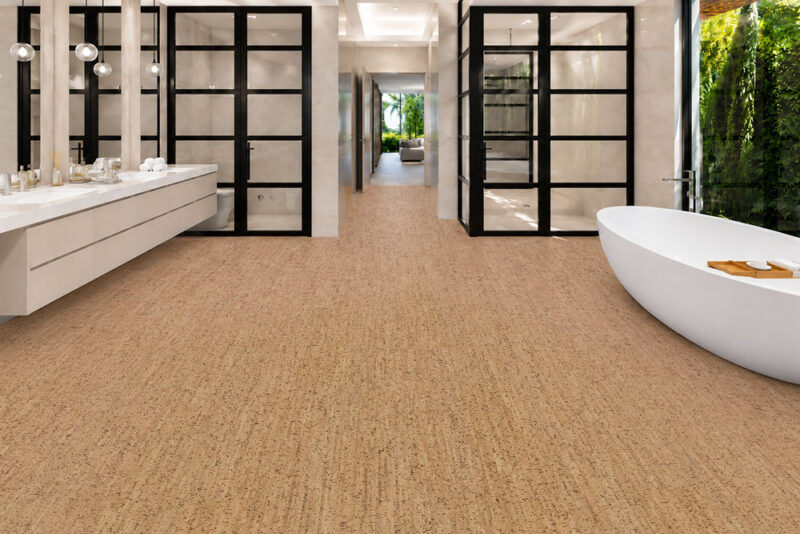
That gives the floor many of the characteristics people originally come to cork flooring for:
- warmth underfoot
- resilience
- acoustic comfort
- thermal insulation
- natural cork texture
- comfortable standing and walking
For a properly prepared home in a humid environment, this construction removes the moisture-sensitive HDF core found in conventional floating cork.
Shop Cancork Glue-Down Cork Flooring
6mm or 8mm Cork?
Both thicknesses provide the benefits of solid cork.
The 8mm option contains more cork material and therefore provides additional thermal and acoustic insulation.
For a colder Canadian climate, that extra cork can be particularly attractive in rooms where underfoot warmth and comfort are priorities.
Subfloor Preparation Is Critical
The performance of a glue-down cork floor depends heavily on what is underneath it.
The substrate must be:
- flat
- smooth
- structurally sound
- clean
- dry
- free of incompatible coatings or contaminants
Flooring-grade plywood is generally one of the simpler substrates for a bonded cork installation.
Concrete requires considerably more attention.
Glue-Down Cork and Concrete
This is one of the most important distinctions for Canadian homeowners.
We do not recommend installing glue-down cork directly over typical below-grade basement concrete.
The reason is not that cork itself cannot tolerate moisture.
The problem is the entire installation system.
Ground moisture and alkaline salts can migrate through concrete and interfere with the water-based contact adhesive holding the cork to the slab.
Cancork’s installation instructions require cement surfaces used for glue-down cork to be above grade and incorporate appropriate damp-proof protection. Concrete must also be properly moisture tested before installation. Cancork
The calcium chloride moisture test should indicate less than:
3 lbs per 1,000 sq. ft. over 24 hours. Cancork
A concrete floor that looks dry is not necessarily dry.
This is particularly important in older Canadian homes, where basement construction and vapour protection can vary substantially.
For a below-grade basement with uncertain moisture conditions, TechSlate may be a much better starting point.
Don’t Forget the Final Finish
Installation of glue-down cork does not end when the tiles are bonded to the floor.
The specified water-based polyurethane finish is applied after installation.
This final finish protects the surface and helps seal the joints between individual cork tiles.
Cancork’s installation system specifies water-based polyurethane after installation, with additional protection appropriate to the expected traffic and room use. Cancork
What About Fibreglass and Other Unusual Subfloors?
Occasionally we hear from customers planning cork flooring for houseboats, recreational spaces and other projects where the subfloor is fibreglass rather than plywood or concrete.
These projects require individual evaluation.
Do not assume that an adhesive will bond successfully simply because fibreglass is a non-porous material.
The actual surface may contain:
- wax
- coatings
- paint
- release agents
- sealers
- contaminants
and the structure itself may experience movement, temperature variation or condensation.
Some industrial water-based contact adhesives list both cork and fibreglass among compatible materials. However, unusual substrates should always be evaluated according to the current adhesive manufacturer’s instructions.
For fibreglass or another non-standard substrate, we recommend identifying the exact surface, confirming adhesive compatibility and performing a small bond test before proceeding.
Option 2: TechSlate® for More Demanding Moisture Conditions
For difficult moisture environments, TechSlate is a very different type of flooring.
Instead of relying on a conventional wood-fibre core, TechSlate uses a predominantly mineral/fibre-cement construction.
That makes it particularly interesting for:
- basements
- damp climates
- coastal properties
- kitchens
- entrances
- restaurants
- retail spaces
- offices
- other demanding residential or commercial installations
Explore TechSlate Flooring at Cancork
Mineral construction and water stability
TechSlate’s mineral construction gives it excellent dimensional stability when exposed to moisture.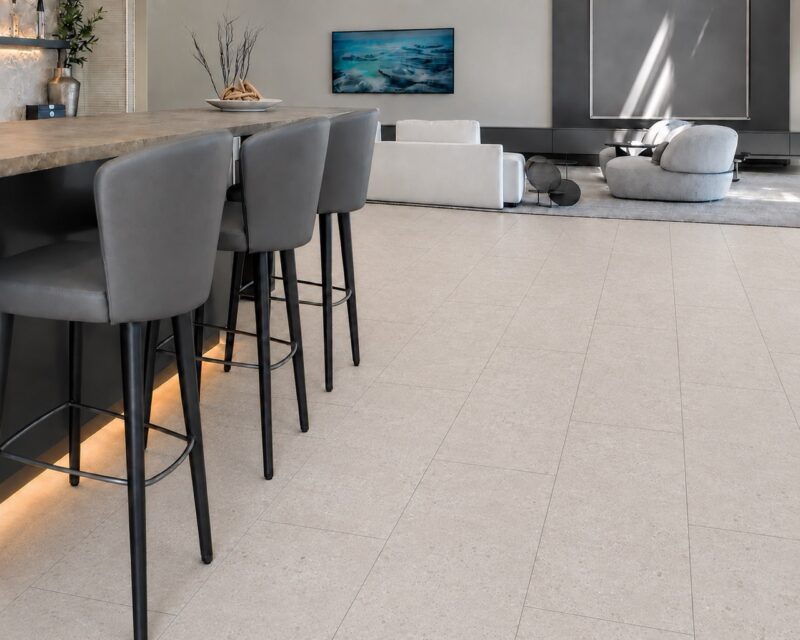
This is fundamentally different from a conventional wood-fibre flooring core.
That makes TechSlate particularly worth considering when the project involves a concrete slab or a location where moisture performance is one of the primary concerns.
Designed for Heavy Residential and Commercial Use
TechSlate is not simply a waterproof residential flooring option.
Its construction is designed for demanding traffic conditions, which makes it appropriate for both residential and commercial projects.
This can be particularly valuable in Canadian entrances and commercial environments where flooring must deal not only with humidity but also with rain, wet footwear and seasonal weather.
Click-Lock Installation
One of TechSlate’s biggest practical advantages is that it provides the appearance and solidity associated with mineral flooring without requiring a traditional ceramic-tile installation.
Cancork carries TechSlate in a 7.5mm floating/click-lock format, making installation considerably more straightforward for many renovation projects. Cancork
This is particularly useful when homeowners want a durable mineral floor without the construction involved in setting conventional stone or ceramic tile.
An Alternative to Vinyl Waterproof Flooring
Vinyl is one option for homes in humid climates. Compare the complete construction, moisture limits and room suitability of each flooring product.
TechSlate offers another direction.
Its mineral-based construction gives homeowners an option when water resistance and dimensional stability are priorities but conventional plastic-based flooring is not their preferred material.
Option 3: Forna Natural Composite Flooring
Not everyone who needs waterproof performance wants the appearance or feel of stone.
For those homeowners, Forna Natural Composite Flooring offers another solution.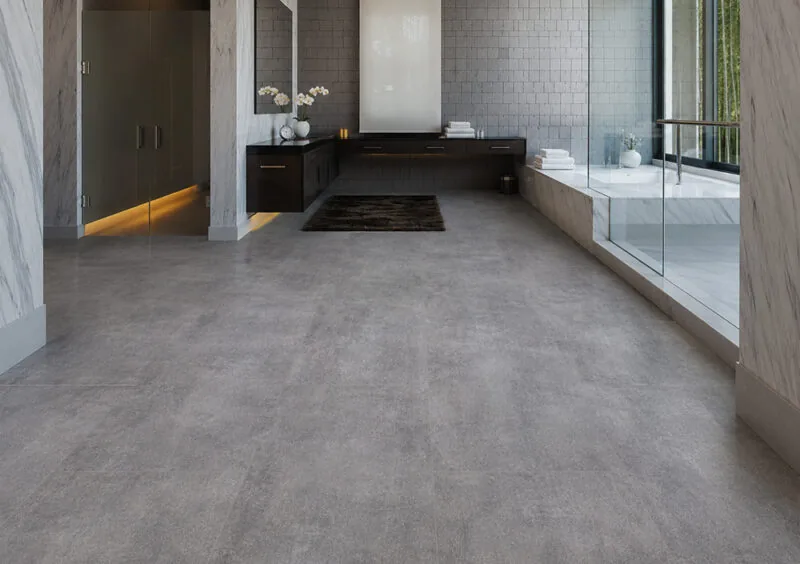
This Swiss-made engineered floor combines three important components:
Natural composite surface + waterproof Hydrowood core + cork backing
Explore Forna Natural Composite Flooring at Cancork
Natural Composite Surface
The 1.5mm surface uses a natural composite based on materials including linseed oil, pine resin, limestone, wood/cork flour and jute.
A protective PU layer provides the wear surface required for everyday use. Cancork
This gives the flooring a very different material composition from conventional vinyl flooring.
Waterproof Hydrowood Core
Underneath the natural surface is a waterproof engineered Hydrowood core.
According to the product specifications, the core records less than 1% swelling after 24 hours in water under EN 317 testing. Cancork
This makes Natural Composite particularly interesting for homeowners who want a floating click floor but require substantially greater moisture resistance than a traditional HDF-core product.
Cork Backing Adds Warmth and Quiet
The bottom layer is cork.
That attached cork backing contributes to underfoot comfort and provides approximately 18 dB of impact-sound reduction according to the current product specifications. Cancork
For Canadian homes, this combination can be particularly attractive:
water-resistant performance above, cork comfort underneath.
Commercial-Grade Performance
Natural Composite is rated for:
Class 23 residential use
and
Class 33 commercial use. Cancork
That allows the product to combine the warmer character homeowners want in living spaces with performance suitable for much more demanding applications.
Which Flooring Is Right for Your Canadian Home?
The following is a useful starting point:
| Situation | Flooring to Consider |
|---|---|
| Climate-controlled home in Vancouver or coastal BC | Traditional floating cork may still be suitable |
| Want genuine cork without an HDF core | 6mm or 8mm glue-down cork |
| Suitable plywood subfloor | Glue-down cork |
| Above-grade concrete that passes moisture testing | Glue-down cork may be considered |
| Below-grade basement concrete | Start by considering TechSlate |
| Severe moisture concerns | TechSlate |
| Want mineral-based waterproof flooring | TechSlate |
| Want waterproof-core floating flooring with a warmer feel | Natural Composite |
| Want maximum cork warmth and comfort | Glue-down cork |
| Want an easy click-lock system | TechSlate or Natural Composite |
| Fibreglass or another unusual substrate | Confirm adhesive compatibility and perform a bond test |
The table is intended as a starting point. The actual building conditions still need to be evaluated.
Coastal British Columbia vs. Atlantic Canada
“High humidity” does not describe one single building condition.
A house near Vancouver may experience long periods of cool, wet weather but have excellent indoor humidity control.
A coastal home in Nova Scotia may experience a different combination of ocean air, seasonal humidity, snow and heating.
A cottage beside a lake in Ontario may have relatively dry winters but significant seasonal moisture when it is opened in spring.
A heavily wooded property can remain damp even when nearby open areas are relatively dry.
That is why the conditions inside the building are more important than the province or postal code.
Before ordering flooring, determine:
- indoor relative humidity
- whether the space is continuously heated or conditioned
- subfloor material
- whether there is a crawl space
- whether concrete is above or below grade
- concrete moisture levels
- potential for leaks or standing water
- whether the building is occupied year-round or seasonally
Those answers tell us much more about flooring suitability than outdoor humidity alone.
Waterproof Flooring Does Not Mean a Wet Subfloor Can Be Ignored
This is probably the single most important point in this article.
A waterproof flooring material does not make an unresolved moisture problem underneath it disappear.
Excessive subfloor moisture can affect:
- adhesives
- primers
- levelling compounds
- plywood
- concrete
- finishes
- indoor environmental conditions
Always address the source of the moisture first.
Then choose the flooring system that is appropriate for those conditions.
Natural Flooring Doesn’t Have to Stop at the First Sign of Humidity
Canadian homeowners do not necessarily have to choose between a comfortable natural floor and good moisture performance.
Different flooring constructions solve the problem in different ways.
Solid glue-down cork removes the HDF core and gives you the warmth, quietness and resilience of genuine cork.
TechSlate uses mineral-based construction for demanding moisture conditions and heavy-use applications.
Forna Natural Composite combines a natural composite surface, waterproof Hydrowood core and cork backing in a convenient click-lock plank.
The correct solution depends on the entire floor assembly—not simply whether the local climate is described as “humid.”
When choosing waterproof flooring for humid climates, consider indoor humidity, subfloor construction, moisture movement and potential water exposure together.
Start With Samples Before Ordering Your Floor
Flooring colours and textures can look very different under Canadian winter light, direct summer sunlight and artificial interior lighting.
We recommend viewing samples in the actual room before selecting the full floor.
Once you have narrowed down the colour and material you prefer, confirm your subfloor and moisture conditions before placing the full order.
That small amount of planning can make a major difference in how the finished floor performs for years to come.
 Flooring
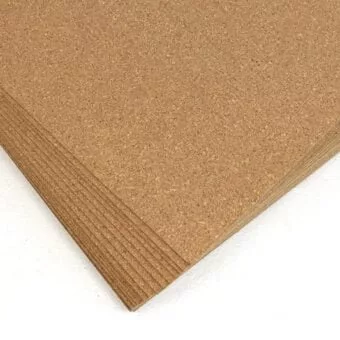 Cork Underlayment
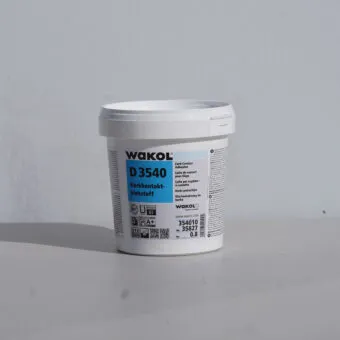 Supplies & Guides